Interim vs. fractional sales leader: what's the difference – and what do you need?
An interim sales leader fills a gap for a limited period. A fractional sales leader stays with the company over time, part-time. We explain the difference – and how to know which you need.
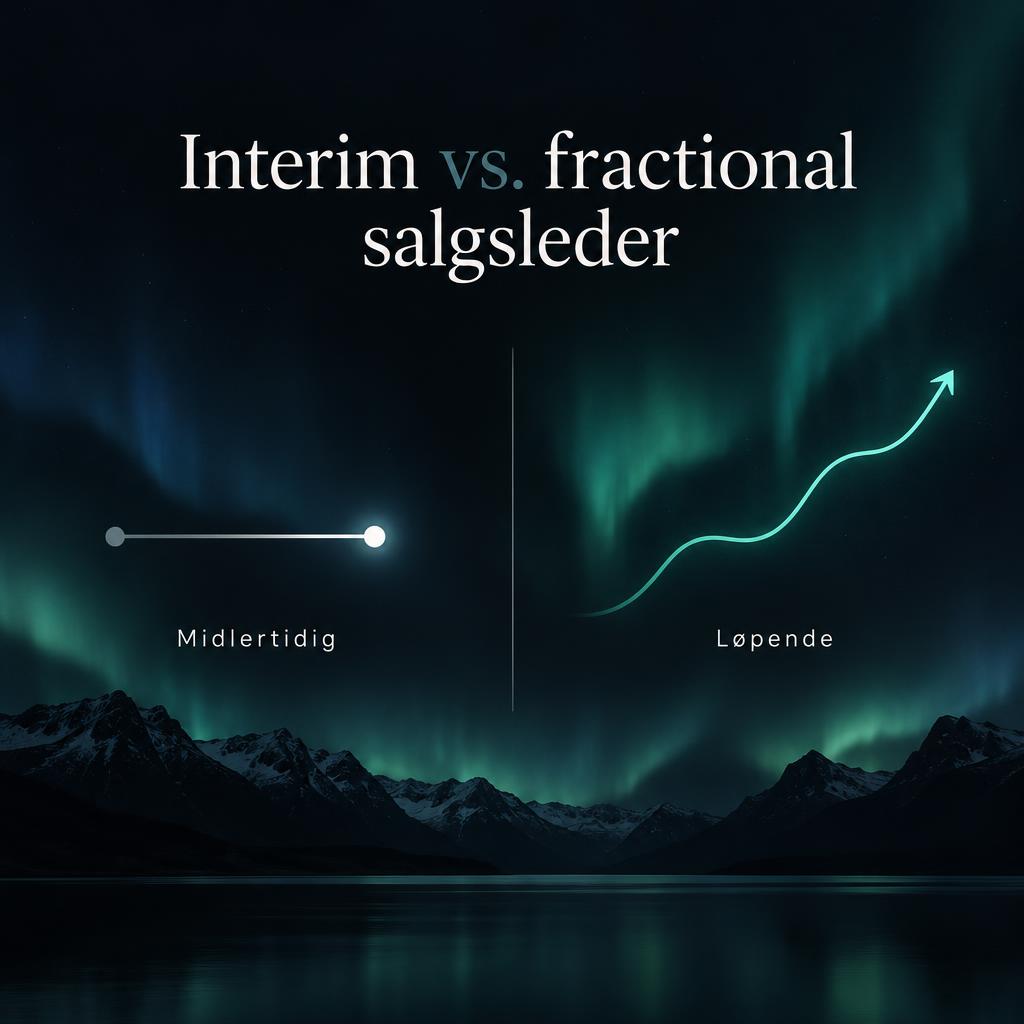
In short: an interim sales leader is a temporary leadership resource who fills a gap for a limited period, while a fractional sales leader is a permanent but part-time resource who stays with the company over time. Both are hired in from outside, but they solve different needs. Below we explain the difference – and how to know which one you need.
What is an interim sales leader?
An interim sales leader is an experienced leader brought in to cover a sales leadership role for a limited period. The need typically arises when a situation has a defined end: a sales director leaves suddenly, goes on leave, or the company is going through a restructuring, an acquisition or a turnaround that requires seasoned leadership here and now.
The hallmarks are temporariness and a clear mandate: the assignment has a fixed timeframe, an agreed outcome and a planned exit. Once the gap is filled or a permanent leader is in place, the job is done.
What is a fractional sales leader?
A fractional sales leader is an experienced sales leader you have on a permanent basis, but only for a share of the time – for example one or two days a week. "Fractional" means exactly that: you get senior sales leadership without paying for a full-time employee.
The difference from interim lies in duration and purpose. There is no end date. The role is ongoing, and the point isn't to fill a gap but to give the company continuous commercial leadership sized for where it is. It suits companies that need direction and structure in sales but don't yet have the volume for – or the need for – a full-time sales director.
The key difference
Both are senior, hired-in resources. What sets them apart is duration, purpose and how they're used:
Interim sales leader
- Duration: limited period
- Scope: often close to full-time
- Purpose: fill a gap or manage a transition
- Typical trigger: vacancy, leave, restructuring, crisis
- Exit: planned from the start
Fractional sales leader
- Duration: ongoing, no end date
- Scope: part-time (e.g. 1–2 days a week)
- Purpose: build and lead sales over time
- Typical trigger: growth, need for direction without a full-time head of sales
- Exit: none – adjusted as needed
In short: interim is a stand-in for a defined situation; fractional is a permanent part-time partner.
When should you choose which?
Choose interim when the situation has a clear end. You've lost your sales director and need someone to keep the machinery running while you recruit. You're in a restructuring or acquisition and need a steady hand on the wheel for a limited phase. The need is acute and time-bound.
Choose fractional when the need is lasting but not big enough for a full-time hire. You want to build a sales process, get structure on the pipeline, or have a commercial sparring partner at leadership level – without hiring an expensive sales director before the volume justifies it. Then ongoing part-time is the right model.
A rule of thumb: if you're counting down to an end date, it's interim. If you want someone with you for the road ahead, it's fractional.
What does this mean for IT consultancies and SaaS companies?
For many IT consultancies and SaaS companies, the fractional model fits best. Growth often comes from founder-led or technical sales that at some point stalls: the product is good, but nobody owns the sales process, and there's neither time nor volume to hire a full-time sales director.
That's where a fractional sales leader brings direction, structure and commercial weight from day one, scaled to what the company actually needs. You get senior expertise without the fixed salary, and can increase the scope as sales grow. Interim is still right in acute situations, but for a growth company that wants to build sales step by step, an ongoing partner is usually a better answer than a temporary stand-in.
Frequently asked questions
Are interim and fractional the same thing?
No. Both are hired-in senior sales leadership, but interim is temporary and fills a gap, while fractional is ongoing part-time with no end date.
What does a fractional sales leader cost compared to an employee?
You pay for a share of the time, not a full salary with employer taxes and pension. That makes senior expertise available to companies that don't yet have the volume for a full-time head of sales.
How long does a fractional engagement last?
It's ongoing and adjusted as needed. Many start with a few days a month and increase the scope as sales grow.
When is interim the right choice instead?
When the need has a clear end – for example a vacancy, leave, restructuring or a crisis that requires seasoned leadership for a limited period.
Need sales leadership – at the right size?
We're happy to have a no-obligation conversation about what kind of commercial leadership your company needs right now.